
Guadalajara, Jalisco, Mexico – At just 20 years old, Nina Padme Eufracio Rojas is already breaking barriers in science, space simulation, and education.
This year, the Jalisco native became the youngest woman named to Forbes México’s 2026 list of Mexico’s 100 Most Powerful Women. It marks her second consecutive nod from the magazine, following her spot on its 30 Under 30 list at age 19, alongside recognition from Destacados Líderes as one of Latin America’s top 100 leaders.
Her drive for discovery started early. By age six, she was competing in mathematical logic olympiads, eventually expanding into mental arithmetic, physics, chemistry, and biology.
Those early competitions earned her more than 30 national and international medals. They also paved the way for major honors like the State Youth Award in Science, the National Award for Student Merit, and international recognition from UNICEF México and the KidsRights Foundation.
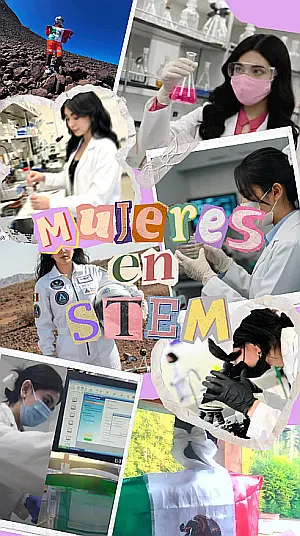
Today, her research tackles a fundamental question: what determines the limits of life? To find answers, she blends molecular biology, artificial intelligence, and aerospace engineering.
At the University of Guadalajara, she investigated how epigenetic changes contribute to alcohol-related liver disease. In space microbiology, she developed a project presented at the 2024 Central American Space Congress on genetically optimizing Deinococcus radiodurans – a radiation-resistant bacterium – to produce protective antioxidants.
She also uses bioinformatics to study how Antarctic microbes survive extreme cold. Meanwhile, her AI tools, Hemo-EyeScan and IA-ChemSpectra, help screen hemoglobin and interpret chemical spectra. Even her engineering work at Tecnológico de Monterrey looks skyward, optimizing heat-transfer structures and gravitational math models for aerospace dynamics.
Those cosmic interests extend beyond theory. Recognized as Mexico’s youngest analog astronaut, she participates in simulated space missions to test how humans can survive off-world.
She collaborates directly with Norberto Álvarez Romo, who commanded the second Biosphere 2 mission in Arizona in 1994. Together, they bridge her hands-on simulation work with his pioneering experience running closed-loop life-support systems, tackling the exact challenges astronauts will face in future deep-space habitats.
Yet some of her most impactful work happens right here on Earth, far from high-tech labs. When she was 15, she founded ALEBRIJES International STEM, a nonprofit bringing free science outreach, mentoring, and entrepreneurship programs to underserved communities.
Since its launch, the organization has reached more than 72,000 people – including 21,768 in 2026 alone – many from areas affected by poverty and limited educational resources. Through programs like ALEBRIJES Innovators, she helps students turn local scientific ideas into real-world ventures.
To bring science directly to the classroom, she led Mexico’s first statewide STEM education tour across Jalisco in 2026, delivering free workshops and hands-on experiments to students who had never experienced anything like it. In 2027, her team plans to take this traveling program nationwide so that distance or cost never keeps a curious student out of a lab.
Having already given over 200 talks around the world, she continues to champion equal access to discovery. She reminds audiences that while science and brilliant minds are everywhere, where someone is born should never limit how far they can go.

We need your support to keep Banderas News thriving. As more and more news outlets resort to paywalls, we remain steadfast in our mission to provide free, quality journalism to Puerto Vallarta residents and visitors. Your contribution helps us maintain this commitment and continue serving our community.