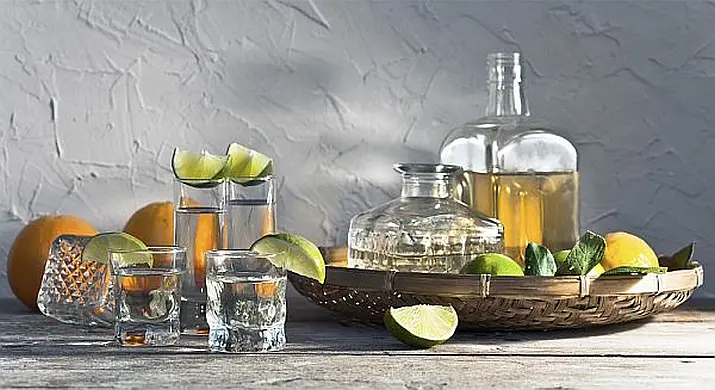
Puerto Vallarta, Jalisco, Mexico – Travelers exploring the western coast of Mexico may encounter an unusual local spirit tucked away in roadside shops and mountain villages. Known as Raicilla (rye-see-ya), this distinctive agave spirit has long been associated with the rural communities of Jalisco, where generations of producers developed traditional methods for turning native agave into a flavorful drink.
For many years, Raicilla was produced and sold quietly. The name itself is believed to have been adopted as a way to disguise the spirit as something other than mezcal and avoid restrictions and taxes placed on alcohol production. Bottles were often replaced by recycled containers, and small roadside stands or simple palapas served as informal points of sale.
The traditional product could be quite strong, with a raw character that reflected its handmade origins. Yet beneath the intensity was a distinctive flavor and lingering finish that encouraged curious drinkers to seek out smoother examples of the spirit.
Today, Raicilla is gaining greater recognition as producers combine historic techniques with modern approaches to quality and presentation.
One example is Destiladora del Real, located in the mountains above Puerto Vallarta. The surrounding region has a long history of mining, and local lore holds that miners who earned good wages expected their spirits to meet equally high standards. The distillery continues that tradition while producing Raicilla on a more refined scale.
An Agave Native to Western Jalisco
Raicilla is produced in several municipalities across western Jalisco, including San Sebastián del Oeste, Hostotipaquillo, Talpa, Mascota, Atenguillo, Guachinango and Etzatlán.
The region’s combination of soil, rainfall and sunshine provides favorable conditions for the agaves used to make the spirit. Among them are plants commonly associated with Agave inaequidens and Agave maximiliana, known locally as Pata de Mula, or “Mule’s Foot.”
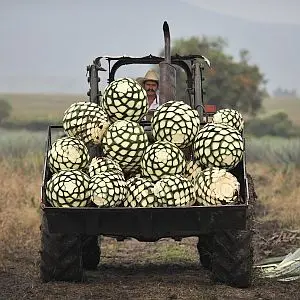
These agaves are generally smaller than the varieties commonly associated with tequila and pulque. As the plant matures, it produces a flowering stalk known as a quiote. Producers remove the stalk so the plant’s sugars remain concentrated in its heart.
After roughly eight to 10 years, the agave is ready for harvest. Skilled jimadores use long-handled coas to remove the plant’s spiny leaves, leaving behind the heart, or piña. Resembling a large pineapple, the piña can weigh around 100 pounds before it is transported to the taberna, where the transformation into Raicilla begins.
A Process Rooted in Tradition
At a traditional Raicilla operation, much of the work is still done by hand.
The piñas are placed inside large, wood-fired brick ovens, or hornos, where they cook for approximately 24 hours. Once softened, the agave is chopped with machetes and crushed using large wooden mallets called mazos. The pulp is worked inside a wooden trough known as a batea.
The crushed agave and its juices are then transferred into wooden fermentation vats with copper bottoms, called perols, or into large drums. Natural yeasts begin the fermentation process, which can take seven to nine days.
After fermentation, the vessel is sealed, traditionally with adobe mud, and connected to a copper distillation coil. The mixture is heated for approximately eight hours, producing the clear spirit that becomes Raicilla.
The finished distillate is sold by Destiladora del Real under names including Las Raicillas del Real and La Punta.
The production process helps explain why small-batch Raicilla is considered a specialty spirit. Approximately 15 pounds of agave are needed to produce a single liter of Raicilla, while only about 50 liters of distillate may be produced during a 24-hour period.
Traditional producers have also developed their own ways of judging the quality of a distillation. One old practice involves tossing the first drops and observing the spirit as it emerges, using evaporation as a simple indication of quality.
How to Enjoy Raicilla
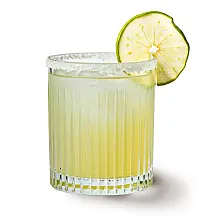
Raicilla can be enjoyed straight in a caballito, the small glass commonly associated with tequila. It can also be served chilled in a wineglass or poured over ice.
For a more casual preparation, it is often paired with grapefruit soda, such as Squirt or Fresca. The citrus flavor complements the earthy and sometimes fruity character of the agave spirit.
As interest in Mexico’s traditional spirits continues to grow, Raicilla offers travelers another way to discover the agricultural and cultural heritage of western Jalisco. What was once an obscure drink sold quietly along mountain roads is increasingly being appreciated for the craftsmanship, history and regional identity contained in every bottle.
A Mexican saying captures the enduring place of agave spirits in local culture: “Para todo mal, mezcal, y para todo bien también” – for everything bad, mezcal, and for everything good, too.

For over 25 years, Banderas News has been the pulse of Puerto Vallarta, bringing you stories that matter most to residents and visitors alike. From breaking news to exciting events and cultural features, we’ve been dedicated to keeping you informed and connected – free of charge. Your contribution helps us maintain this commitment and continue serving our community.