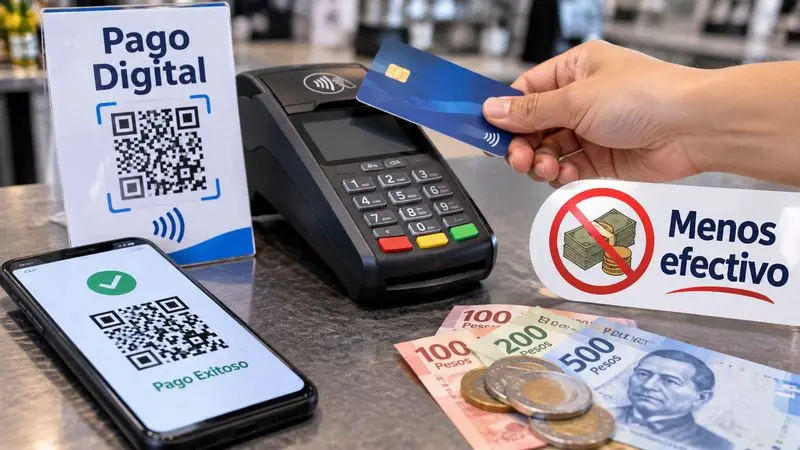
Mexico’s Senate has cleared the final legislative hurdle for a major financial shift, officially approving the Digital Economy Law for Digital and Electronic Payments. Passed on October 20, 2026, with a 73-to-34 vote, the measure previously passed through the Chamber of Deputies and now sits on President Claudia Sheinbaum’s desk awaiting signature and publication in the Official Gazette of the Federation.
Rather than outlawing physical currency overnight, the legislation establishes a phased approach toward a cashless society. Within 15 business days after the decree takes effect, the Ministry of Finance and Public Credit will outline specific strategic sectors where paper money will no longer be accepted.
Initial targets for mandatory electronic transactions include highway toll plazas, fuel purchases at service stations, and payments for government paperwork or utility services.
To help everyday citizens navigate the shift, the framework officially recognizes a broad mix of everyday technologies, ranging from standard debit and credit cards to SPEI bank transfers, contactless NFC devices, and QR-based platforms like CoDi and Dimo.
To streamline the setup process and reduce reliance on physical paperwork, the reform also introduces the Digital CURP and a Digital Citizen File, allowing customers to open accounts or register for financial services online without stepping inside a bank branch.
Senators from Morena, the Labor Party (PT) and the Green Ecologist Party of Mexico (PVEM) supported the measure, while opposition lawmakers from the National Action Party (PAN), the Institutional Revolutionary Party (PRI) and Movimiento Ciudadano voted against it.
Supporters say the transition could help small businesses operate within the formal economy, reduce tax evasion and improve security by limiting the amount of physical cash handled by businesses and consumers. Greater use of traceable electronic transactions could also help strengthen oversight of financial activity.
Opponents warned that mandatory digital payments could create difficulties for people who lack access to banking services or reliable internet connections. Rural communities and other vulnerable groups could face challenges if cash is no longer accepted for certain transactions.
The potential cost to small businesses is another concern. Bank fees and the expenses associated with adopting electronic payment systems could cut into already narrow profit margins, particularly for businesses that rely heavily on cash transactions.
Despite those objections, the bill moves forward as part of the administration’s broader economic strategy. Once signed into law by President Sheinbaum, the Ministry of Finance will begin releasing detailed timelines for when each designated sector must complete its transition to fully digital transactions.

We Need Your Support: While other local media outlets have retreated behind paywalls, at Banderas News, we believe news should be free for everyone. Would you help us provide essential information to our readers at no cost? We can’t do it without you. Your contribution helps us sustain and grow.