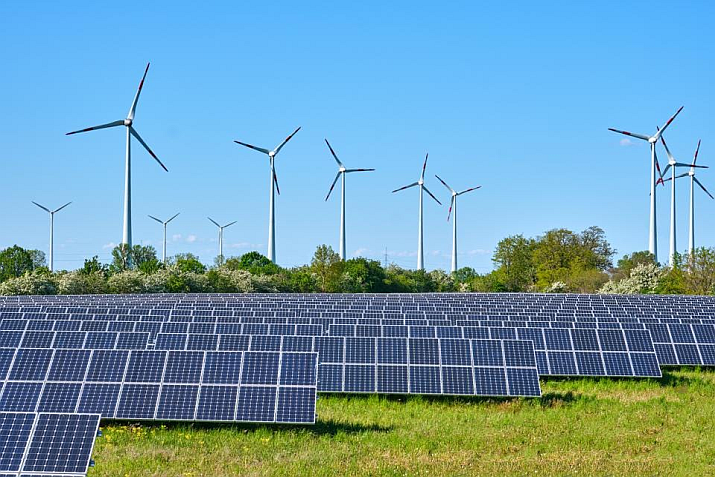
Mexico could be on the verge of a significant expansion in renewable energy, as new government policies create fresh opportunities for solar and wind power development while strengthening the country’s electricity system.
For the past 25 years, Mexico has depended heavily on fossil fuels for electricity generation. Between 2000 and 2024, oil, natural gas and coal accounted for nearly 80% of the country’s power generation. That balance could begin to change as the administration of President Claudia Sheinbaum moves forward with a new energy policy framework.
In June, the government selected 7,410 megawatts (MW) of utility-scale solar and wind projects from nearly 38,000 MW proposed by developers. The strong response highlights substantial investor interest in expanding renewable energy in Mexico.
Solar projects accounted for approximately 6,700 MW of the selected capacity, while about 700 MW was awarded to wind projects. Under the new rules, every project must include battery storage equal to at least 30% of its generation capacity, with storage systems capable of supplying electricity for a minimum of three hours.
The requirement is designed to make renewable energy more dependable by allowing stored electricity to be delivered when generation from the sun or wind is temporarily reduced. Initial reviews, interconnection studies, contracts and permit applications are expected to continue through the fall, with the government aiming to complete the process by the end of 2026.
Mexico’s Changing Energy Mix
Mexico’s electricity system has undergone a major shift in its use of fossil fuels over the past two decades. In 2000, oil generated about 45% of the country’s electricity, while natural gas accounted for 22%.
By 2024, oil’s contribution had dropped to just over 7%, while natural gas had increased to approximately 62%. Coal generation has also declined from a peak of about 13% in 2005 to roughly 7% today.
Renewable energy experienced its own period of rapid growth. Wind and solar accounted for only 3.2% of Mexico’s electricity generation in 2017, with wind providing nearly all of that share. By 2021, their combined contribution had climbed to almost 12%, divided relatively evenly between the two technologies.
Development then slowed considerably, and the renewable share of electricity generation remained largely unchanged.
The latest policy changes could provide a new push for renewable development. Mexico’s government has set a goal of adding approximately 20,000 MW of renewable generation and 5,000 MW of battery storage by 2030.
Potential Benefits Beyond Clean Energy
The expansion of solar, wind and battery storage could have benefits extending well beyond reducing fossil fuel use. A more diverse electricity system could strengthen Mexico’s energy security, improve grid reliability and help provide more stable access to electricity for homes and businesses across the country.
Technological advances have also made renewable generation and battery storage increasingly practical for large-scale power systems. Combining renewable generation with dispatchable storage can help address one of the main challenges of solar and wind power: production varies depending on weather and time of day.
For Mexico, increased renewable capacity could also support economic development by providing additional electricity for growing communities and industries while reducing dependence on imported fuels.
If the government meets its 2030 targets, the coming years could mark a significant turning point for Mexico’s energy sector, giving solar and wind power a much larger role in meeting the country’s growing electricity needs.

We Need Your Support: While other local media outlets have retreated behind paywalls, at Banderas News, we believe news should be free for everyone. Would you help us provide essential information to our readers at no cost? We can’t do it without you. Your contribution helps us sustain and grow.