







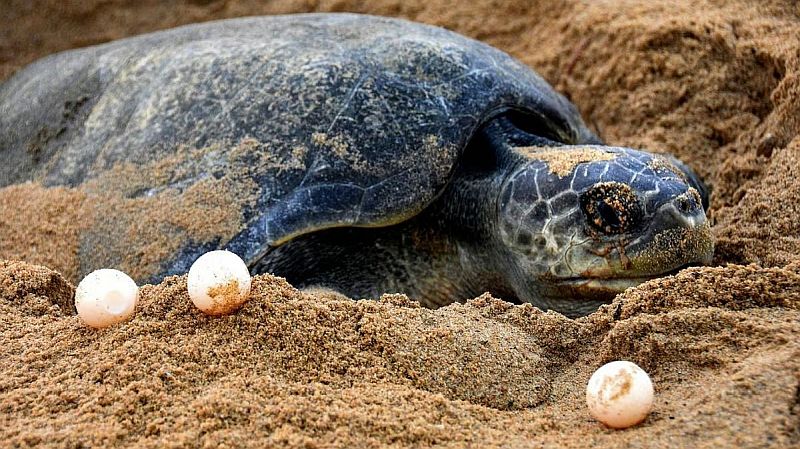
Puerto Vallarta, Jalisco, Mexico – Thousands of sea turtles return to Jalisco’s beaches each year, marking the continued success of one of Mexico’s most important conservation efforts. Thanks to decades of protection, monitoring, and community involvement, populations of the olive ridley sea turtle (Lepidochelys olivacea) have shown a steady recovery after suffering severe declines during the last century.
The olive ridley is the most common sea turtle species found on Jalisco’s coast and the most abundant in the world. Conservation experts credit its rebound to Mexico’s ban on sea turtle harvesting, the protection of nesting beaches, and the ongoing work of environmental organizations, researchers, volunteers, and coastal communities.
From June through December, thousands of olive ridley turtles come ashore on beaches in Puerto Vallarta, Cabo Corrientes, and other parts of Jalisco to lay their eggs. A single nest typically contains 80 to 100 eggs, and when protected in turtle camps, hatching success rates can reach 75 to 90 percent.
Despite these encouraging numbers, survival remains difficult. Predators, environmental conditions, and other natural threats mean that only about one in every thousand hatchlings is expected to reach adulthood. This makes the protection of every nest especially important.
Jalisco’s coastline includes several important nesting areas and biological corridors that support sea turtle reproduction in the Mexican Pacific. Ongoing monitoring programs help ensure these habitats remain protected.
Turtle camps throughout the Banderas Bay region play a key role in conservation efforts. Their teams patrol beaches, protect nests, relocate eggs to secure hatcheries when necessary, guard against poaching, and release hatchlings into the ocean. They also help educate residents and visitors about the importance of protecting sea turtles and their habitat.
While sea turtle populations have made significant gains, challenges remain. Climate change, rising sand temperatures, plastic pollution, accidental capture in fishing gear, and coastal development continue to threaten the species.
Even so, conservation efforts in Puerto Vallarta and across Jalisco are helping improve the odds for thousands of hatchlings each year. Although only a small percentage will survive to adulthood, each protected nest contributes to the continued recovery of a species that once faced a much more uncertain future.

For over 25 years, Banderas News has been the pulse of Puerto Vallarta, bringing you stories that matter most to residents and visitors alike. From breaking news to exciting events and cultural features, we’ve been dedicated to keeping you informed and connected – free of charge. Your contribution helps us maintain this commitment and continue serving our community.