“Sì, Señor, It’s War.” This was the headline in an English newspaper just before the match between Argentina and England in the final stages of the 1986 World Cup in Mexico. It was just a game, of course, but it certainly went far beyond sports. Winning became an opportunity for Argentina to get back at the English.
The wounds of the 1982 Falklands War between the two countries were still fresh in 1986, and the match took on a deeply symbolic meaning. Argentina won the game 2-1, giving the players a victory on the field that resonated deeply within the national consciousness.
The victory was “stained” by the first goal scored by Diego Armando Maradona, who used his hand to punch the ball into the net. Neither the referee nor the linesmen saw it, and the goal was declared valid despite the English players’ vociferous complaints.
Later in the game, Maradona scored a second goal, which has since been labeled the “Goal of the Century.” The Argentine star dribbled past five English players in a 68-meter run to score again, clinching victory for his country.
Asked if he had used his hand, Maradona declared in a later interview that it was the “hand of God.” Years later, he admitted in his 2000 autobiography, Yo Soy el Diego, that he had indeed used his hand and did not regret it. To him, winning was all that mattered, and in a small way, Maradona gave his fellow countrymen a symbolic payback for the Falklands War.
When two countries meet in the World Cup, it is rarely just a game; national pride is at stake far beyond the pitch. In 1966, when England beat West Germany in the final to win the World Cup, many English fans saw it as a sporting repeat of their victory in World War II.
In 1988, when Holland defeated Germany in the European Championship, delirious Dutch fans threw their bicycles into the air and shouted that they had finally gotten their “bikes back”—a reference to WWII, when occupying Nazi forces confiscated all the bicycles in Holland.
Similarly, in 1998, the Iranian national team defeated its U.S. counterpart in France. Iranians poured into the streets of Tehran to celebrate. Neither team ultimately won that World Cup, but beating a historical “enemy” prompted Ayatollah Ali Khamenei to state that the players had made their nation proud. It was seen as a way of paying back the “Great Satan” for American support of the Shah and Iraq.
Soccer is the most popular sport around the globe. Much of its appeal lies in the simplicity of the game, but its true power comes from the intense national feelings it generates. This sense of nationalism emerges just before kickoff as the national anthems are played. Players these days are expected to sing along; if someone does not, the cameras will inevitably catch it, framing it as a lack of patriotism.
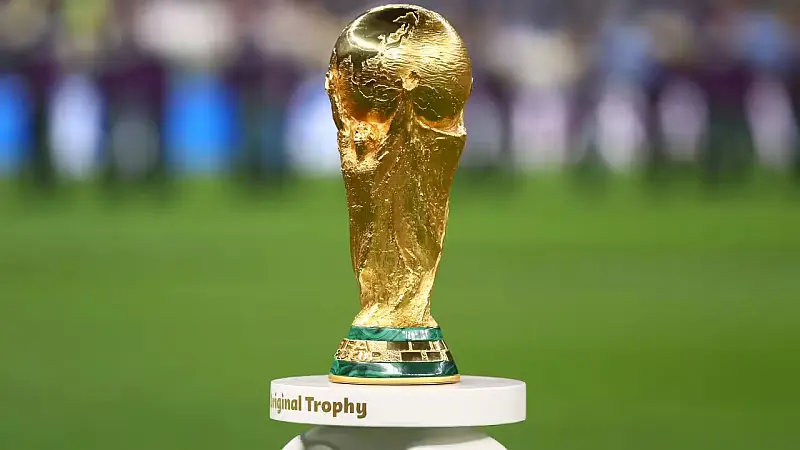
As a low-scoring game, it is theoretically possible for a weaker team to emerge victorious in a single match. However, lifting the actual trophy is usually reserved for perennial powerhouses like Germany, France, Argentina, Brazil, England, Spain, and Italy. Yet, even advancing to the quarterfinals or, in exceptional cases, the semifinals is a monumental victory for many underdog teams. In some cases, beating a giant like Brazil or France is the psychological equivalent of winning the tournament itself.
Conversely, losing to a “smaller” footballing nation can trigger a national disaster. In 1966, North Korean players became heroes at home when they shocked Italy. The Italian players, on the other hand, were greeted at the airport by furious fans throwing tomatoes and lemons.
Sadly, soccer fever engenders an enthusiasm that political leaders frequently exploit for their own agendas. Just winning a single match against a wealthy nation suggests to a developing country that while they may not equal major world powers economically or politically, they can best them on the field. For a fleeting moment, they feel superior to the defeated country – not just in soccer, but in every aspect of life. It is an illusion, of course, but soccer fever is incredibly potent.
If geopolitical rivals meet on the pitch, it is never just a game. Ultimately, settled sports rivalries might just be a better way to resolve differences instead of shooting missiles at each other, costing thousands of lives, and destroying global economies.
Written by Domenico Maceri, PhD, an emeritus professor of Romance Languages at Allan Hancock College in Santa Maria, California. Domenico is the author of a book on Pirandello, one on Spanish grammar, and another on Italian grammar. He has also published a number of articles in newspapers and magazines around the world, some of which have won awards from the National Association of Hispanic Publications. He currently writes a weekly column on American politics for the Italian newspaper Avanti.