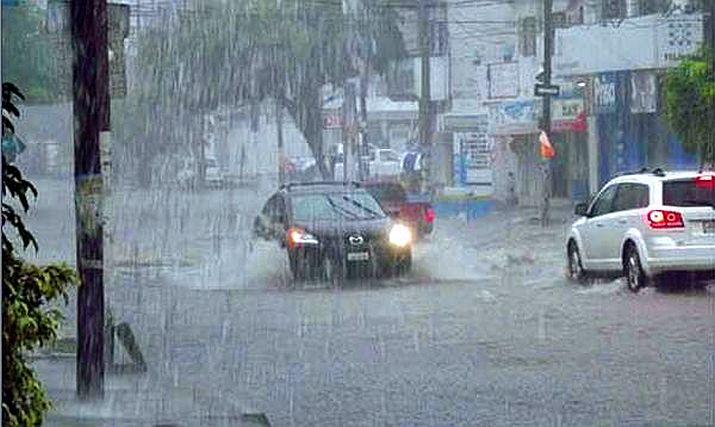
Clouds are beginning to gather over Mexico’s Pacific coast as forecasters watch for what could become the first tropical cyclone of the 2026 hurricane season. If current projections hold, Puerto Vallarta and the Banderas Bay region may soon receive the first meaningful rains of the year, marking the long-awaited transition toward the summer rainy season.
Meteorologist Víctor Manuel Cornejo López, advisor to the Bay’s Civil Protection Scientific Committee, said atmospheric conditions are steadily evolving in favor of increased rainfall across western Mexico. He noted that residents could see one or two significant rain events before the end of May as tropical moisture continues moving into the region.
According to Cornejo López, the seasonal shift is being fueled by tropical waves traveling across southern Mexico and the Caribbean. One system is currently crossing the Isthmus of Tehuantepec, while another is approaching from the Caribbean Sea, both contributing humidity and instability needed for storm development.
Although eastern states have already entered their rainy season, western Mexico is still awaiting the full interaction of low-pressure systems and strengthening trade winds that traditionally trigger more consistent precipitation along the Pacific coast.
Computer forecast models now suggest the Pacific’s first tropical cyclone could organize and strengthen between May 30 and 31. While many residents welcome the prospect of rain after months of dry heat, experts caution that the first storms may initially make conditions feel even more uncomfortable.
The combination of rainfall, warm pavement, and lingering high temperatures is expected to create heavy humidity, replacing the current dry heat with a hotter and more suffocating atmosphere in the days following the first downpours.
Seasonal outlooks indicate rainfall across Puerto Vallarta and surrounding communities could surpass historical averages beginning in June, with wetter conditions likely expanding through July. August is expected to deliver intense heat, while September could bring periods of prolonged and heavy rainfall.
Forecasters are especially concerned about October, when El Niño is projected to reach its greatest strength. That climate pattern may increase the likelihood of stronger storms, excessive precipitation, and a higher risk of tropical systems approaching or making landfall along the Pacific coast.
Meteorologists also expect above-average rainfall to continue unusually late into the year, potentially extending through November and December — a pattern not commonly seen in the Banderas Bay region. At the same time, temperatures are forecast to remain consistently above normal for the remainder of 2026.
Local authorities are urging residents to monitor official forecasts and prepare early as hurricane season begins to take shape across the Pacific.

Your local news matters. Banderas News is your trusted source for Puerto Vallarta news and information, keeping you informed about the issues that affect your daily life. Unlike other media outlets, we believe news should be free and accessible to everyone. Your contribution helps us maintain this commitment and continue serving our community.