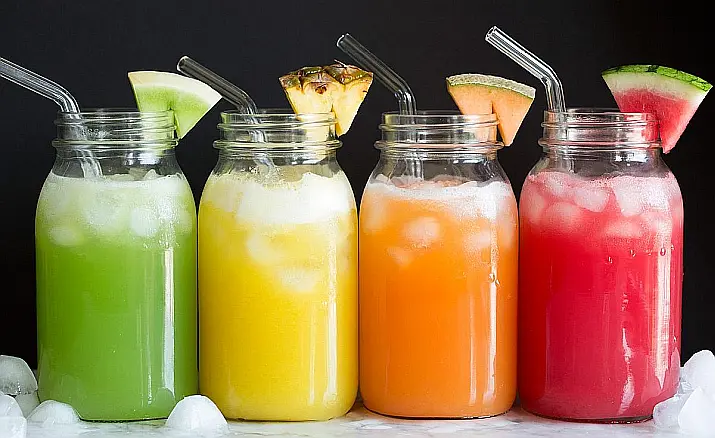
When I first moved to Puerto Vallarta, I had no idea what an agua fresca was.
I’ll admit it – I assumed it was basically Mexico’s version of Kool-Aid. Sweet, colorful, and probably loaded with sugar.
Thankfully, I was completely wrong.
The more I learned, the more I realized that traditional aguas frescas are rooted in fresh, simple ingredients. Many are made from ripe fruit, herbs, seeds, flowers, or grains blended with water to create refreshing drinks that have been enjoyed throughout Mexico for generations.
As a Functional Diagnostic Nutrition Practitioner, that immediately caught my attention. I love finding ways to enjoy local traditions while still supporting my health. So instead of avoiding aguas frescas altogether, I started making my own at home using filtered water, fresh ingredients, and a little stevia when I want extra sweetness.
Another reason I prefer making them myself is that I know exactly what’s going into them. Many commercially prepared drinks are stored in large plastic containers, often outdoors in the heat. While they certainly add to the authentic charm of many street stands, I personally try to reduce my exposure to unnecessary plastics whenever possible. I also like being able to control the sweetness instead of relying on large amounts of sugar.
One of the things I love most about aguas frescas is how customizable they are. You can use almost any fruit that’s in season, add fresh herbs, experiment with spices, or even include nutrient-rich grains and seeds. They truly are one of the healthiest and most refreshing traditions I’ve discovered since moving to Mexico.
Why Homemade Aguas Frescas Can Be a Healthy Choice
When they’re made with fresh ingredients, aguas frescas can offer much more than refreshment.
Fresh fruits naturally provide vitamins, minerals, antioxidants, and phytonutrients that help protect our cells from oxidative stress. Many fruits are also naturally high in water, making them an excellent way to stay hydrated during Puerto Vallarta’s hot and humid summers.
Making them at home also allows you to:
Control the amount of sweetener.
Use filtered water.
Skip artificial colors, flavors, and preservatives.
Reduce unnecessary plastic exposure.
Enjoy more whole-food nutrition.
As with anything, moderation is still important, but homemade aguas frescas can be a wonderful alternative to soda and many bottled beverages.
My Favorite Healthy Aguas Frescas:

CREAMY AMARANTH HORCHATA
Traditional horchata is most often made with white rice, but I love giving it a functional twist by using amaranth instead.
Amaranth is an ancient seed that’s naturally gluten-free and packs considerably more protein and fiber than white rice. It’s also a good source of magnesium, iron, manganese, phosphorus, and lysine – an essential amino acid that many grains lack. While traditional horchata is certainly a delicious treat, using amaranth adds extra nutrition and may help support steadier blood sugar compared to a rice-based version.
The result is a creamy, lightly nutty horchata that’s just as refreshing but with a little more nutritional value.
Ingredients
1 cup raw amaranth, well rinsed
4 cups filtered water
2 cinnamon sticks
1 cup unsweetened full-fat coconut milk
1 teaspoon pure vanilla extract
Pinch of sea salt
Stevia, to taste
Directions
- Rinse the amaranth well under cool water using a fine-mesh strainer.
- Place the rinsed amaranth, filtered water, and cinnamon sticks into a large glass container. Cover and soak overnight, or for at least 8 hours. Soaking helps soften the amaranth, may improve digestibility, and allows the cinnamon to infuse throughout the drink.
- Pour everything—the soaking water, amaranth, and cinnamon sticks—into a high-speed blender.
- Add the coconut milk, vanilla, sea salt, and stevia.
- Blend on high for 2–3 minutes, or until the mixture is completely smooth and creamy.
- Strain through a nut milk bag, cheesecloth, or a fine-mesh strainer into a pitcher to remove the remaining solids.
- Chill well and serve over ice with a light sprinkle of ground cinnamon, if desired.
This version has all the comforting flavors of traditional horchata while adding the nutritional benefits of amaranth and the rich creaminess of coconut milk.
PINEAPPLE BASIL AGUA FRESCA
This has become one of my favorite tropical combinations.
Pineapple is naturally rich in vitamin C and manganese and contains bromelain, an enzyme that may help support healthy digestion and a normal inflammatory response. Basil contributes antioxidants and fragrant essential oils that pair beautifully with pineapple while adding a refreshing herbal note.
Ingredients
3 cups fresh pineapple chunks
6–8 fresh basil leaves
4 cups filtered water
Juice of 1 lime
Stevia, to taste
Directions
Blend all ingredients until smooth. Strain if desired, chill, and serve over ice with a basil leaf or lime slice for garnish.

TAMARIND AGUA FRESCA
Tamarind has been enjoyed throughout Mexico and many parts of the world for centuries. Its sweet-and-tart flavor makes one of the most refreshing drinks on a hot afternoon.
Beyond its incredible taste, tamarind contains natural antioxidants called polyphenols, along with potassium, magnesium, and small amounts of B vitamins. Traditionally, tamarind has also been used to support healthy digestion, making it both delicious and functional.
Ingredients
8 ounces seedless tamarind pulp
5 cups filtered water
Juice of 1 lime
Stevia, to taste
Directions
Soak the tamarind pulp in warm water for about 30 minutes. Mash it thoroughly with your hands or a spoon, then strain to remove any remaining fibers. Stir in the lime juice and stevia, chill, and serve over ice.
CREAMY CANTALOUPE AGUA FRESCA
If you’ve never tried cantaloupe in an agua fresca, you’re missing out.
Cantaloupe is naturally rich in vitamins A and C, along with potassium and plenty of water, making it one of the most hydrating fruits available. Coconut milk adds creaminess without dairy while providing healthy fats that make the drink extra satisfying.
Ingredients
4 cups ripe cantaloupe
1 cup full-fat coconut milk
3 cups filtered water
Juice of ½ lime
Pinch of sea salt
Stevia, to taste (optional)
Directions
Blend everything until completely smooth. Chill and serve over ice.
Bringing Mexico Home
One of my favorite parts of living in Puerto Vallarta has been discovering that many traditional Mexican foods are rooted in simplicity – fresh ingredients, incredible flavors, and recipes that have been passed down for generations.
aguas frescas are a perfect example.
Whether you’re sipping one after a day at the beach or serving one to friends on your patio, they remind us that healthy doesn’t have to be complicated. Sometimes all it takes is fresh fruit, filtered water, a handful of herbs, and a willingness to try something new.
For me, making aguas frescas at home has become one more way to enjoy the beautiful culture of Mexico while staying true to my functional health philosophy. They’re refreshing, nourishing, endlessly customizable, and proof that some of the healthiest traditions are also the simplest.
Here’s to staying cool, staying hydrated, and raising a glass to one of Mexico’s most delicious and refreshing traditions.

Have a Healthy day!
Heather
Heather Gray, FDN-P, is a master certified health practitioner, best-selling author, speaker, stand-up comedian, and host of the Renegade Health Boss podcast. A proud Puerto Vallarta resident, she shares her passion for health, resilience, and personal transformation while enjoying the adventure, community, and fresh perspective she found in Mexico.