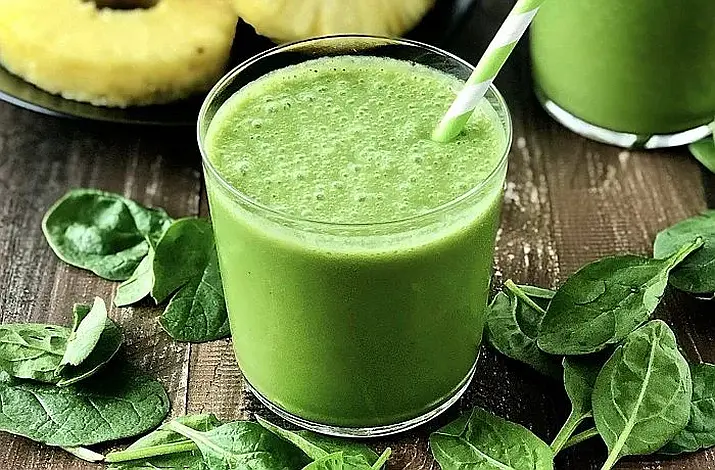
When I first moved to Puerto Vallarta, there were so many little things about Mexico that delighted me. But one of the simplest was something I kept seeing on breakfast menus all over town: jugo verde.
I was absolutely tickled pink.
Where I came from in the United States, if you wanted a fresh green drink, you usually had to hunt down a juice bar, health food restaurant or wellness café – and you were probably going to pay a pretty penny for it. Here, I could sit down at an ordinary neighborhood restaurant, order breakfast and there it was: a tall glass of freshly made green goodness.
It felt fresh. It felt healthy. It tasted delicious. And as a health practitioner who has spent years encouraging people to eat more real, whole foods, having something like this so readily available genuinely made my heart happy.
It also made me curious. Was jugo verde simply Mexico’s version of the modern green juice trend, or was there more of a story behind that beautiful glass of green?
A Mexican Tradition, Not Just a Wellness Trend
While green juice has become a major wellness trend in the United States and elsewhere, Mexico has a longstanding culture of fresh juice stands, mercados and fruterías where freshly prepared juices are simply part of everyday life. In Mexico City, for example, street vendors selling fresh orange juice and mixed juices – including jugo verde – are a familiar morning sight.
There isn’t one official recipe for jugo verde. That’s part of its charm.
Depending on where you order it – or who is standing behind the blender – you might find some combination of nopal, celery, parsley, cucumber, pineapple, orange, grapefruit, lime, apple or other leafy greens. The Mexican government even highlights nopal as an ingredient that Mexicans have incorporated into green juice.
Nopal, the edible paddle of the prickly pear cactus, is especially interesting. It’s an ingredient deeply associated with Mexican food culture and helps distinguish traditional Mexican jugo verde from many of the green juices we see north of the border.
What’s So Good About All That Green?
From a nutritional standpoint, what I love most about jugo verde is pretty simple: it’s another opportunity to get plants into your day.
Depending on the recipe, you’re getting fruits, vegetables and herbs that naturally provide vitamins, minerals, antioxidants and other beneficial plant compounds. The Mexican government’s agricultural information service specifically notes that green juices can provide nutrients such as vitamins, minerals, antioxidants and fiber, depending on how they’re prepared.
Take a typical glass apart and you’ll see why.
Nopal contributes fiber and plant nutrients. Cucumber adds water and makes the drink incredibly refreshing – something I especially appreciate during a Puerto Vallarta summer. Parsley and leafy greens add additional vitamins and phytonutrients. Pineapple, orange, grapefruit or lime bring vitamin C along with the sweetness and acidity that make all of those vegetables taste surprisingly good.
There is one important distinction, though: how you prepare it matters.
If everything is blended and you drink the pulp, you’re retaining considerably more of the plant’s natural fiber than you would if you run everything through a juicer or strain the finished drink. That’s why, when I make mine at home, I prefer to leave the good stuff in.
And although fruit makes jugo verde delicious, more isn’t necessarily better. Some versions can contain quite a bit of fruit juice or added sweetener. I personally like mine vegetable-forward, with just enough pineapple, orange or another fruit to balance the flavor.
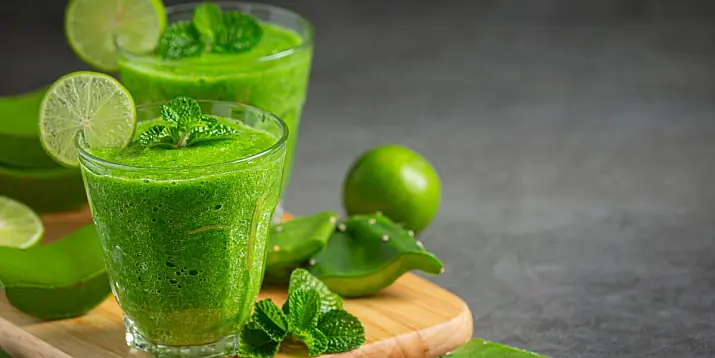
Make Your Own Jugo Verde
One of the best things about jugo verde is that you really don’t need an exact recipe. Think of this as a starting point and adjust it until you find your favorite combination.
Heather’s Loose Jugo Verde Recipe
½ nopal paddle, cleaned and chopped
Juice of one grapefruit or orange
1 celery stalk
Small handful of fresh parsley
½–1 cup fresh pineapple
Filtered water
Small piece of fresh ginger, optional
One Tuna (I like to add a bit of aloe vera pulp or artichoke leaves. If using artichoke leaves, blend them first with the grapefruit juice and strain out the fibers, then return the mixture to the blender with the rest of your ingredients.)
Ice (optional)
Put everything into a blender and blend until smooth. Add additional water as needed until you reach the consistency you like.
I prefer not to strain it, because that allows you to keep more of the natural fiber from the fruits and vegetables. If you’re new to green drinks, start with a little more pineapple or orange. As your taste buds adjust, decrease the fruit and increase the greens.
And don’t be afraid to experiment. Apple, grapefruit, spinach, mint and other greens can all find their way into a glass of jugo verde. That’s the beauty of it – there really isn’t just one version. Traditional and modern recipes throughout Mexico vary considerably.
One More Reason I Love Living Here
After more than a year of living in Puerto Vallarta, I still get excited about the little things I can find here that I didn’t encounter nearly as often back home.
Jugo verde is one of them.
It’s not a miracle drink. It isn’t going to “detox” your entire body in one glass, erase yesterday’s tacos or magically transform your health. That’s not how health works.
And the fact that I can walk into so many restaurants around Puerto Vallarta and simply say, “Un jugo verde, por favor.“
That still makes this health practitioner’s heart very happy.

Have a Healthy day!
Heather
Heather Gray, FDN-P, is a master certified health practitioner, best-selling author, speaker, stand-up comedian, and host of the Renegade Health Boss podcast. A proud Puerto Vallarta resident, she shares her passion for health, resilience, and personal transformation while enjoying the adventure, community, and fresh perspective she found in Mexico.