
When I first visited Vallarta Vitality, I felt like a kid walking into a candy store.
Every time founder Julia Worrall described one service, another fascinating tool, treatment, or healing modality seemed to appear. From sleep and structural health to regenerative therapies, detoxification support, personalized testing and immersive wellness retreats, the clinic did not fit neatly into one category.
That, according to Worrall, is precisely the point.
“I’m specialized in human physiology – the human body and how it works,” she explained during a recent episode of my podcast, Bioenergetics Beat.
While modern healthcare frequently divides the body into separate specialties, Worrall believes people often need someone willing to step back, examine the entire picture and connect the dots between their symptoms.
From Emergency Medicine to Puerto Vallarta
Worrall’s journey into whole-person healthcare began long before she opened a clinic in Mexico.
Originally from Ontario, Canada, she built a diverse medical career spanning approximately 30 years. She worked as an emergency room nurse, in acute psychiatry and as a forensic nurse examiner supporting survivors of sexual assault and domestic violence. She also spent time as a travel nurse in California and worked inside maximum-security prisons helping bring their healthcare systems closer to community standards.
Her work repeatedly placed her beside people experiencing trauma, illness and some of the most difficult moments of their lives.
“I’ve always loved taking a broken person and putting them back together,” she said.
However, it was her son’s illness that changed the direction of her career.
After he developed a rare health condition, Worrall found herself surrounded by specialists but still unable to find the answers her family needed. Like many parents facing a complicated diagnosis, she began researching relentlessly.
She studied neuroendocrine health, cancer and a wide range of traditional and complementary healing practices. Her search eventually brought her to Puerto Vallarta, where her mother had already lived for decades.
Worrall brought her son to a clinic in Mexico, where she says he received answers and treatment that dramatically changed his life.
That experience left her with a much bigger question: What was happening in Mexico that allowed practitioners to approach difficult cases differently?
She began exploring Chinese herbal medicine, Ayurveda, environmental health and other approaches that were not commonly discussed in the hospitals where she worked.
Her curiosity was not always welcomed.
Worrall recalled coworkers joking about her interest in unconventional practices, asking whether she was drinking her coffee or using it for an enema and teasing her about whether her chakras were aligned.
Behind the jokes, however, some of those same colleagues quietly began seeking her advice.
Doctors and nurses approached her about their own health, their family members and patients whose symptoms they could not explain. Those conversations helped Worrall recognize the value of the knowledge she had accumulated.
“I realized I didn’t have to shrink back because I was ‘just a nurse,’” she said. “I didn’t have to wait for permission to show up and share that information.”
Mexico gave her the opportunity to create the type of clinic she believed patients deserved – one where practitioners could listen to a person’s complete story rather than focusing on one isolated complaint.
When “Your Labs Look Fine” Isn’t Enough
Many people who arrive at Vallarta Vitality have already visited multiple doctors.
They may have normal laboratory results but still struggle with exhaustion, disrupted sleep, inflammation, digestive problems, pain, hormonal symptoms or the lingering effects of chronic stress and trauma.
Worrall believes standard medical appointments often do not allow enough time to understand these complicated cases.
“When you’re only allotted seven minutes per patient, there’s no way,” she said. “That’s not healthcare. That’s a system that manages symptoms.”
She emphasized that conventional medicine remains essential, particularly in emergencies and acute illness. Her concern is that a brief appointment and standard panel of tests may not reveal everything affecting a person with chronic or complex symptoms.
Instead of ordering every available test, Worrall says a practitioner must first listen carefully. The person’s history may reveal which specific evaluations deserve closer attention.
For patients who have repeatedly heard that everything looks normal, simply having someone take their symptoms seriously can be meaningful.
At Vallarta Vitality, the goal is to examine how the different systems of the body may be influencing one another.
Putting the Pieces Back Together
Healthcare has become highly specialized. A person may see a cardiologist for the heart, a gastroenterologist for digestion, a psychiatrist for mental health, an endocrinologist for hormones and another provider for sleep.
The challenge is that those professionals may never speak to one another.
“How often do those people on your team get together, compare notes and put you back together again?” Worrall asked.
Her clinic attempts to bridge some of those gaps by looking at physical structure, sleep, stress, hormones, inflammation, emotional health and lifestyle together.
Worrall has spent more than a decade specializing in sleep and has lectured internationally about how the face, airway and physical structure can affect it.
A person complaining of poor sleep might ordinarily receive a sleeping medication. However, Worrall also examines whether clenching, grinding, airway issues, sleep apnea or structural problems could be contributing.
That part of her work became personal for me.
I had been grinding and clenching my teeth at night, which contributed to facial discomfort, neck tension and poor sleep. After receiving a bite guard through Vallarta Vitality, I began waking up feeling more rested. My face and neck felt better, and the change made me realize how one overlooked issue could affect several other areas of my health.
That does not mean one solution will work for everyone. It does demonstrate why looking beyond the most obvious symptom may reveal another piece of the puzzle.
The clinic’s services extend into several areas, including individualized testing, red-light therapy, biofeedback-oriented wellness technology, regenerative and aesthetic treatments, peptides, detoxification programs and personalized retreats.
Not every service is appropriate for every person, and treatments should always be considered alongside individual health history, medications, risks and qualified medical guidance.
The Environment Can Be Part of Healing
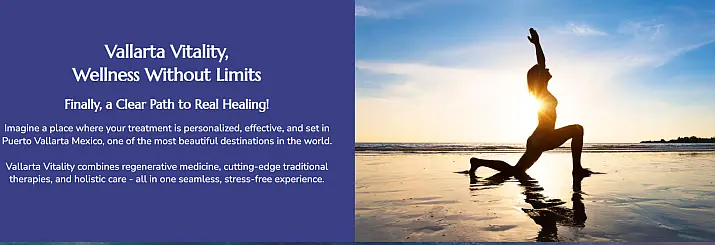
Vallarta Vitality also organizes immersive wellness experiences in Puerto Vallarta.
Worrall describes them not simply as retreats, but as “retreatments.”
Participants still receive the beautiful setting, accommodations, food, relaxation and attentive service associated with a luxury retreat. However, the purpose extends beyond taking a temporary break from everyday life.
“Our goal is that the person who arrived is not the person who leaves,” she said.
The idea is to help people step away from the environment in which their habits, stress responses and personal stories are constantly being reinforced.
Sunshine, nature, grounding, rest and a change of scenery can create space for reflection. The retreat team then combines that environment with individualized health and emotional support.
Some experiences focus on couples, while others address women’s health, men’s health or personal transformation. Depending on the program and the participant, services may explore sleep, hormones, metabolic health, nervous-system regulation, emotional patterns and unresolved trauma.
Worrall believes that what appears to be a relationship problem may sometimes be intensified by physical factors.
A person who has lost interest in a partner, for example, may be experiencing hormonal changes, sleep disruption, inflammation, chronic stress or another health issue affecting energy, mood and desire.
That does not mean every relationship struggle is medical. It means our physical and emotional lives are often far more connected than we realize.
Trauma Lives in More Than Our Memories
This part of our conversation affected me deeply because it mirrors my own healing story.
For years, I addressed Lyme disease and autoimmunity through functional health. I would improve, only to experience another relapse later. Eventually, I began asking what I might still be missing.
I came to understand that trauma does not always exist as a clear memory. Sometimes the conscious mind protects us by burying an experience while the nervous system continues responding as though the danger is still present.
Exploring the mental, emotional and spiritual side of healing helped me recognize patterns that did not feel like the person I truly was. Some belonged to trauma, family conditioning and survival responses that had once protected me but no longer served me.
Worrall has also worked extensively with trauma survivors, including people affected by domestic violence, sexual assault and human trafficking.
She explained that even after a person leaves a dangerous environment, the personality and protective behaviors developed during that period may remain.
Strength can become hypervigilance. Boundaries can become walls. Self-protection can become aggression. These responses are not character flaws; they may be adaptations that helped someone survive.
Healing involves creating enough safety for the body and mind to consider a different way of living.
Psychedelic-Assisted Experiences Require Serious Care
Some Vallarta Vitality retreats may include optional psychedelic or ceremonial experiences for appropriately screened participants.
Worrall discussed the growing interest in substances such as psilocybin and ketamine, particularly in conversations surrounding depression, trauma and emotional health.
However, both of us emphasized that these substances should not be treated casually simply because one may come from a plant or be described as natural.
The person facilitating the experience, the setting, participant screening, medication interactions, mental-health history and available medical support all matter.
“I think the setting and who you have is just as important,” Worrall said. “We make sure the people we have are trained, they’re professionals, they’re licensed, and we are very intentional about the work we do with each person.”
Psychedelic substances can carry serious psychological, medical and legal risks. They are not appropriate for everyone, and no one should abruptly discontinue psychiatric medication or attempt to treat a mental-health condition without qualified professional supervision.
For people who do participate in a carefully screened and professionally supported experience, Worrall believes the work should include much more than the ceremony itself.
Preparation, physical health, emotional support and integration afterward are all essential.
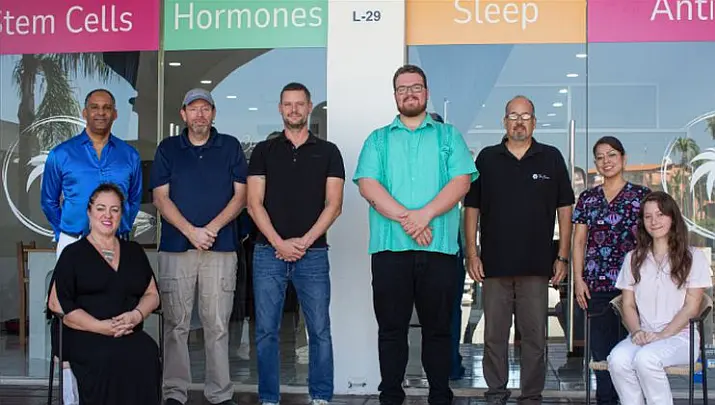
Whether you’re looking for customizable IV therapies, stem cell treatments, peptides, professionally guided plant medicine experiences, bioenergetic scans, red light therapy, personalized detox programs, sleep evaluations, custom bite guards, or microneedling with exosomes and growth factors, Vallarta Vitality offers an impressive range of services under one roof.
Rather than taking a one-size-fits-all approach, the team works to create individualized wellness plans based on each person’s unique health history, goals, and needs. For visitors considering medical tourism, it’s another example of how Puerto Vallarta continues to evolve as a destination for those seeking innovative, integrative healthcare alongside the beauty and relaxation the region is already known for.
Believing in Possibility
One of the most powerful moments in our conversation centered on belief.
On my own client intake forms, I ask people whether they believe they can get better. That belief matters because even the best-designed program cannot force someone to participate in their own healing.
Worrall offered another compassionate perspective.
“If you don’t believe right now, that’s okay,” she said. “We will believe enough for you until you start to see the results.”
She encourages retreat participants to record how they feel when they arrive, why they came and what they hope will change. People sometimes become so accustomed to gradual improvements that they forget how they felt before. Looking back at their own words or images can help them recognize progress they might otherwise overlook.
Not every person will experience a dramatic transformation, and responsible healthcare should never guarantee one.
But for people who have felt dismissed, fragmented or reduced to a collection of unrelated symptoms, being seen as a whole human being may be the beginning of something important.
Worrall’s work represents a broader shift taking place in Puerto Vallarta – one that is attracting visitors from Canada, the United States and beyond who are looking for more personalized wellness experiences.
The most important message from our conversation was not that one treatment, test or retreat can solve everything.
It was that the body is connected.
Sleep affects hormones. Hormones affect mood. Stress affects digestion. Trauma affects the nervous system. Inflammation can affect how we think and feel. Our relationships, surroundings, beliefs and physical health continually influence one another.
Sometimes healing begins when someone finally takes the time to listen to the whole story – and helps us start putting the pieces back together again.
Find out if this is a fit for you HERE.
This article is based on a conversation with Julia Worrall, RN, founder of Vallarta Vitality, on the Bioenergetics Beat podcast. Statements describing treatments, experiences and outcomes reflect the views or personal experiences of the speakers and should not be interpreted as guaranteed results or individualized medical advice. Readers should consult their doctor before beginning any medical, hormonal, psychedelic or detoxification treatment.
Have a Healthy day!
Heather
Heather Gray, FDN-P, is a master certified health practitioner, best-selling author, speaker, stand-up comedian, and host of the Renegade Health Boss podcast. A proud Puerto Vallarta resident, she shares her passion for health, resilience, and personal transformation while enjoying the adventure, community, and fresh perspective she found in Mexico.