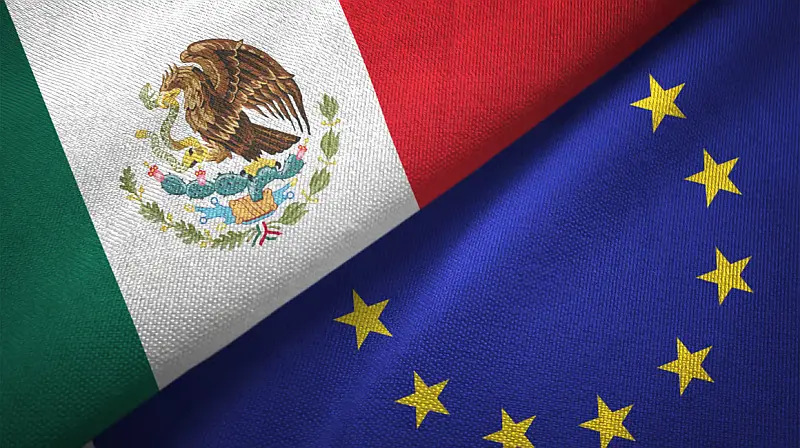
The European Union and Mexico have officially finalized an expanded free trade agreement, aiming to strengthen their economic partnership and broaden their global trade connections.
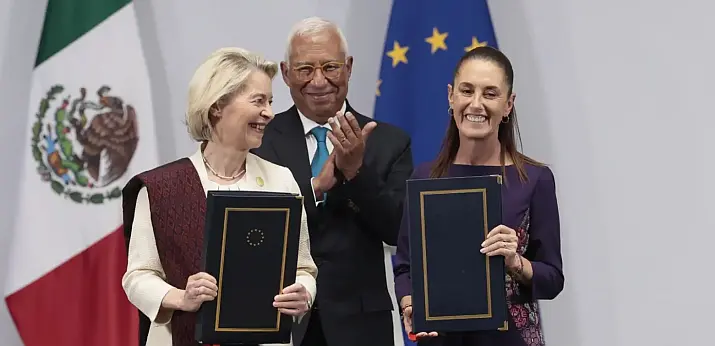
The accord was signed during the eighth EU-Mexico Summit in Mexico City, a gathering that represents the first high-level meeting between the two powers in over a decade.
European Commission President Ursula von der Leyen highlighted the shared benefits of the agreement, stating that the central objective is to generate more value and create new employment opportunities on both sides of the Atlantic.
This updated framework builds upon an initial pact established in 2000. While the original agreement focused primarily on industrial goods, the new version removes duties on almost all products, including agricultural goods, while adding provisions for services, investment, and digital trade.
The transition marks a deliberate effort by both regions to diversify their international commercial relationships during a period of complex global trade dynamics.
Mexican President Claudia Sheinbaum emphasized that current international challenges require greater cooperation and dialogue, noting that lasting prosperity must be built on shared success.
The economic impact of the finalized deal is expected to be substantial. Data from Mexico’s Economy Ministry suggests that Mexican exports to the European market could rise from the current $24 billion annually to $36 billion by 2030. Conversely, European exporters, who currently send approximately $65 billion worth of goods to Mexico each year, will gain enhanced access to the Mexican market.
The agreement lowers barriers for key products, providing duty-free access for European cheese, pork, and milk powder, while opening European markets to Mexican agricultural exports like asparagus and avocados.
Beyond immediate commercial gains, officials view the accord as a strategic alignment between like-minded partners. European Council President António Costa described the modernized global agreement as a clear statement of cooperation that prepares both regions to better navigate modern global economic challenges.
By establishing predictable rules for digital commerce, improving investment protections, and eliminating restrictions on raw materials, the updated partnership provides a stable framework for future economic growth.

We Need Your Support: While other local media outlets have retreated behind paywalls, at Banderas News, we believe news should be free for everyone. Would you help us provide essential information to our readers at no cost? We can’t do it without you. Your contribution helps us sustain and grow.